
On this page
The aim and card values
Baccarat compares two hands, called Player and Banker. The aim is to predict which total will be closer to nine, or whether the hands will tie. Aces count as one, cards from two to nine count at face value, and tens and face cards count as zero. Only the rightmost digit of the total is used: a hand worth 15 counts as five.
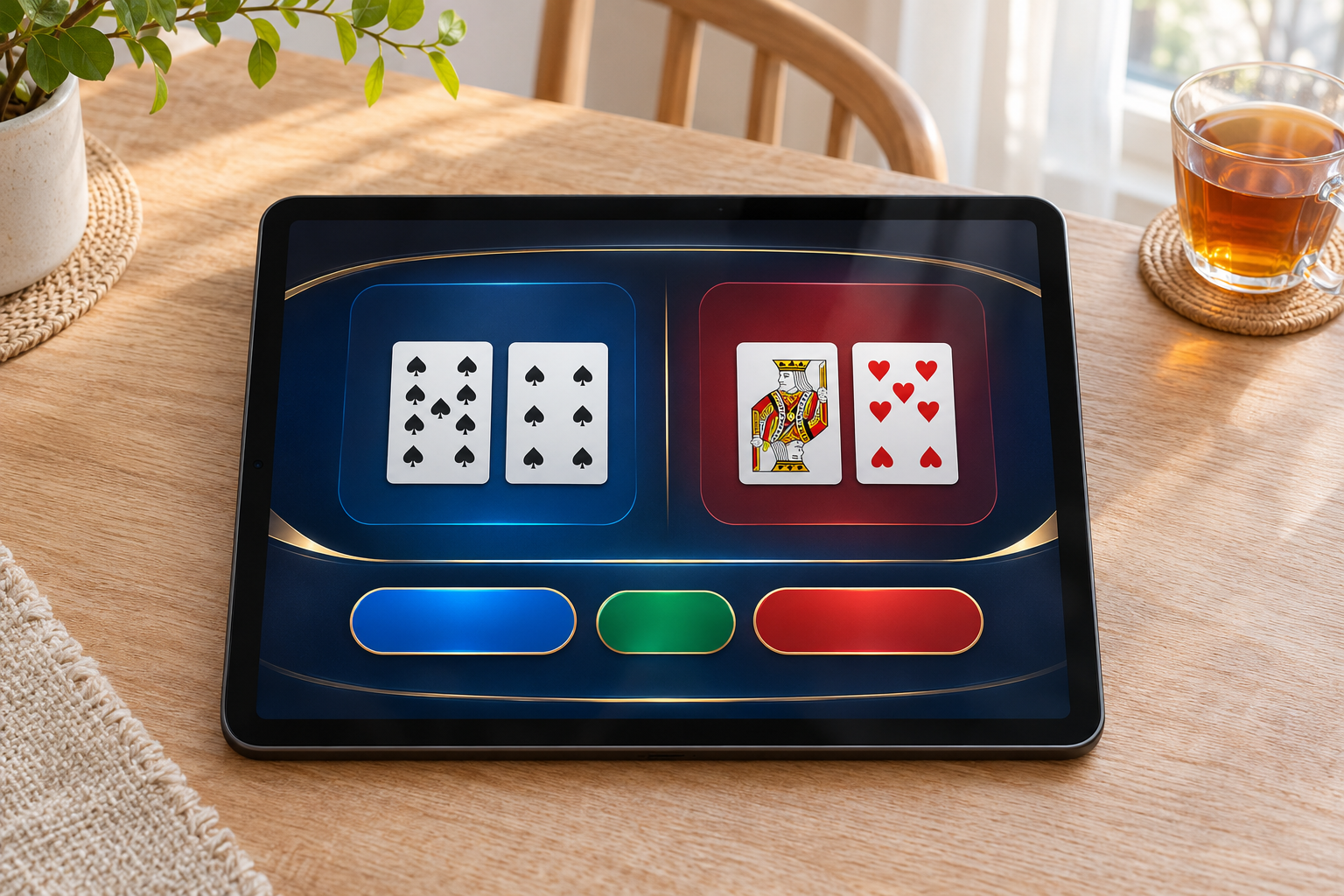
Both sides usually receive two cards. A total of eight or nine is a natural and can end the round immediately. If neither hand has a natural, a fixed drawing table determines whether a third card is dealt. Players do not choose whether to hit or stand.
The three common bets
A Player bet and a Banker bet win when the named hand has the higher total. A Tie bet wins when the totals match, but its payout and probability vary by table. Banker bets often pay slightly less than even money because a commission or alternative payout accounts for the fact that Banker wins somewhat more often under standard drawing rules.
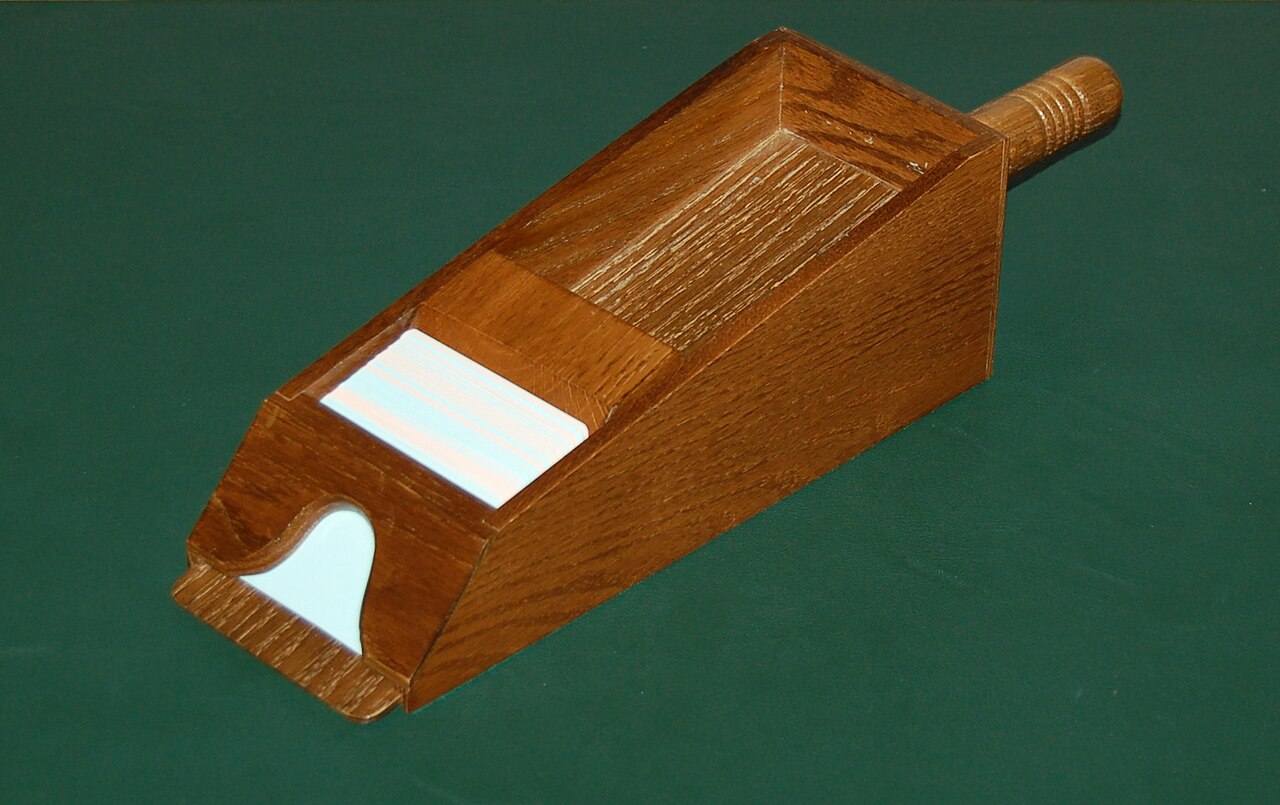
Check whether the game charges commission, uses a no-commission variant, or changes the payout on a specific Banker result. The table layout and paytable should state this before a bet is made.
What a score history can tell you
Scoreboards record previous outcomes. They do not change the drawing rules or make a side more likely to win the next hand. Baccarat remains a game of chance with a house edge under standard casino rules; betting patterns cannot guarantee a profit.
When each hand draws a third card
In standard Punto Banco, the Player hand draws on 0-5 and stands on 6-7; a natural 8 or 9 ends the draw. The Banker rule depends on its first two-card total and, for totals 3-6, the Player's third-card value:
| Banker total | Draw condition |
|---|---|
| 0-2 | Always draws if no natural has ended the round. |
| 3 | Draws unless the Player's third card is 8. |
| 4 | Draws when the Player's third card is 2-7. |
| 5 | Draws when the Player's third card is 4-7. |
| 6 | Draws when the Player's third card is 6 or 7. |
| 7 | Stands. |
If the Player stands on 6 or 7, the Banker draws on 0-5 and stands on 6-7. This is the common Punto Banco tableau; variants can differ. Read the exact game rules. An example of published table rules is Casino St. Moritz's Punto Banco article.
How the table settles each wager
The hand closest to nine wins; a matching total is a tie. A winning Player wager commonly pays even money. A Banker wager may pay less than even money because of a commission, or use a no-commission rule with a different payout on selected Banker results.
Tie settlement depends on the table's rules. A Tie wager has its own payout; a Player or Banker wager may be returned, lose or be settled under a special rule when hands tie. Side bets can use separate outcomes. Check the paytable for the actual return, commission, minimum stake and whether a tie pushes the main wager.
What the score history shows
Roadmaps and bead plates record earlier hands. They can help follow a shoe, but do not alter the drawing table or reveal the next outcome. A streak is not evidence that a hand is due to change. In online play, compare the displayed result with the account transaction record if a settlement looks wrong.
Before a round, confirm whether the game is Punto Banco, whether cards are drawn automatically and how a disconnection is handled. The labels Player and Banker name the two hands; the customer does not choose their cards. The customer chooses a wager; the table determines the draw.
Example: a 7 and 9 count as 6
Suppose the Player receives a 7 and a 9. Their total is 16, so only the rightmost digit counts and the hand value is 6. A Banker hand of 4 and a 2 totals 6. The hands are tied at that point, but the third-card table still determines whether either hand draws; do not settle the round until the rules have completed. A 9 and a King count as 9 and 0, so that is a natural 9.
Here 16 counts as 6, and a later card can change the hand again. If the result looks wrong, compare the card values with the table's point calculation and the final hand history.
Baccarat variants and formats at a glance
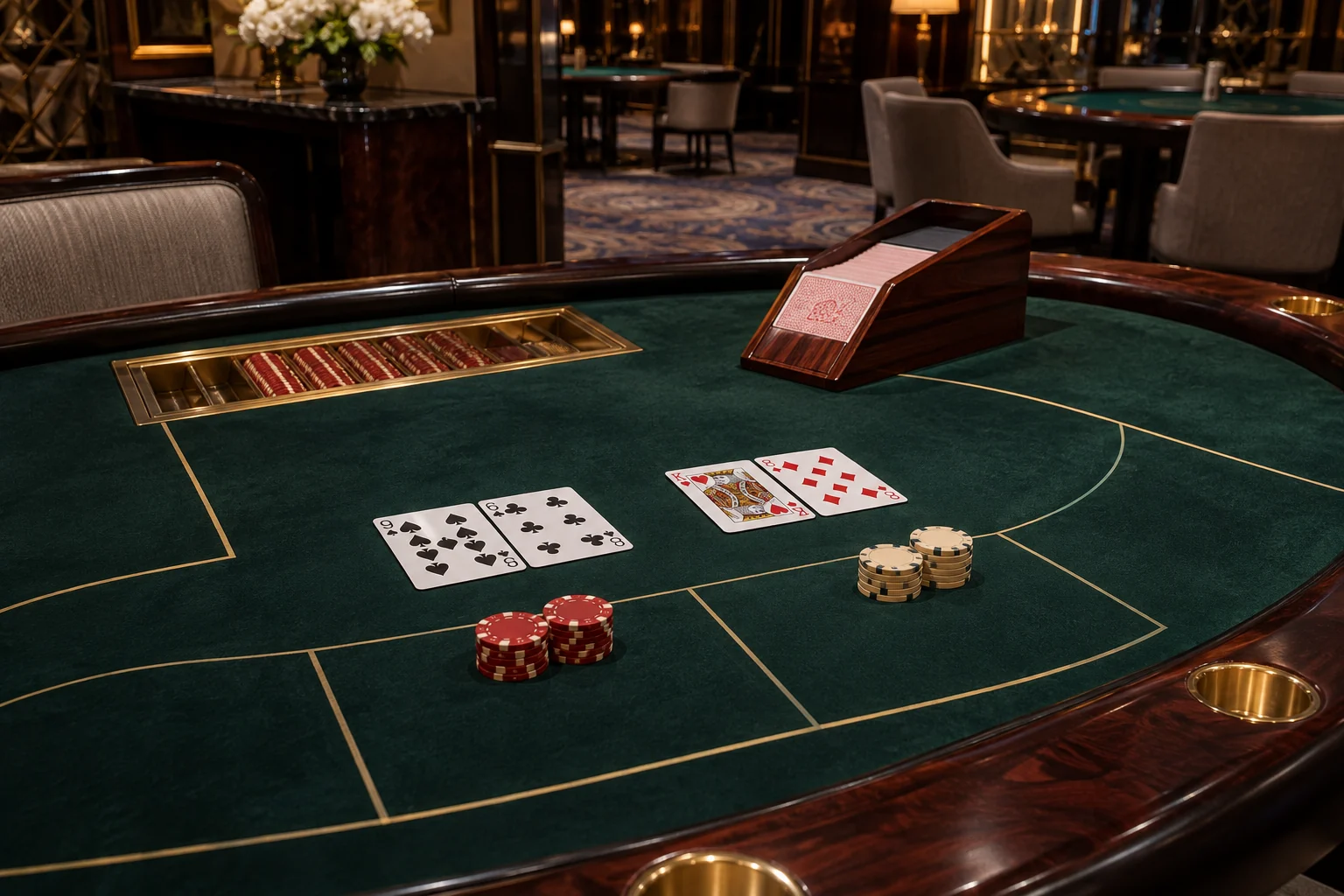
The score is an editorial rating of how easy the format is to learn, not its payout, house edge or chance of winning. New Zealand’s Division 5 baccarat rules include mini and midi formats, but not every casino offers every authorised game. Other entries below are international variants or presentation formats; their inclusion does not mean they are approved or available in New Zealand. Always read the rules for the specific table.
| Variant or format | What changes | Editorial ease-to-learn |
|---|---|---|
| Punto Banco | The common fixed-rule format: the Player and Banker hands follow an automatic third-card table. Customers choose a wager, not the cards. | 5 / 5 |
| Mini Baccarat | A compact table format that commonly uses the Punto Banco drawing rules. Table limits, pace and card-handling procedures can differ. | 5 / 5 |
| Midi Baccarat | A middle-sized table format named in New Zealand’s Division 5 rules. Check the table instructions for who handles the cards and which side bets apply. | 4 / 5 |
| Full-table Baccarat | The larger table presentation. The name describes the format; read the posted rules to confirm the drawing procedure, commission and payouts. | 4 / 5 |
| Chemin de Fer | A traditional variant where a participant may act as banker and player decisions can affect whether a hand draws. It is not the automatic Punto Banco tableau. | 2 / 5 |
| Baccarat Banque | A traditional banking format with a designated banker and a different hand arrangement from Punto Banco. The exact sequence depends on the table rules. | 2 / 5 |
| No-commission Baccarat | The usual Banker commission may be replaced by a reduced payout on a specified Banker result. Check the paytable: “no commission” does not mean every Banker win pays the same. | 4 / 5 |
| Squeeze Baccarat | The dealer reveals cards gradually. This changes the reveal and pace, not the hand values; the table still determines drawing and settlement. | 5 / 5 |
| Speed Baccarat | A faster presentation with shorter pauses between rounds. The drawing rules may remain the same, but quicker rounds can increase total time and spend. | 4 / 5 |