
On this page
In blackjack, you play against the dealer-not the other players. Win with a higher total that does not exceed 21, or by staying in the hand when the dealer busts. You do not need 21 to win: 19 beats a dealer’s 18. A three-card 21, though, loses to a dealer’s natural blackjack.
The basic choices are hit, stand, double and split. The less visible rules matter just as much. In New Zealand, check the natural-blackjack payout, whether the dealer stands on soft 17, when the dealer receives a second card and which doubles or splits the table allows.
Blackjack rules at a glance
| Rule | What it means |
|---|---|
| Objective | Beat the dealer without exceeding 21. |
| Number cards | Cards 2-10 count at face value. |
| Picture cards | Jack, queen and king each count as 10. |
| Ace | Counts as 1 or 11, whichever produces a valid higher total. |
| Natural blackjack | An ace plus a ten-value card in the original two cards. |
| Hit / stand | Take another card / finish drawing. |
| Double / split | Increase the stake for one final card / divide an eligible pair into separate hands, subject to table rules. |
| Dealer | Follows fixed drawing rules; the treatment of soft 17 must be checked. |
| Results | Ordinary win: 1:1; tie: push; natural blackjack: the payout printed for that table. |
Blackjack card values and hand totals
Blackjack uses standard 52-card decks. Hearts, diamonds, clubs and spades have no ranking in the main game; only the card values count.
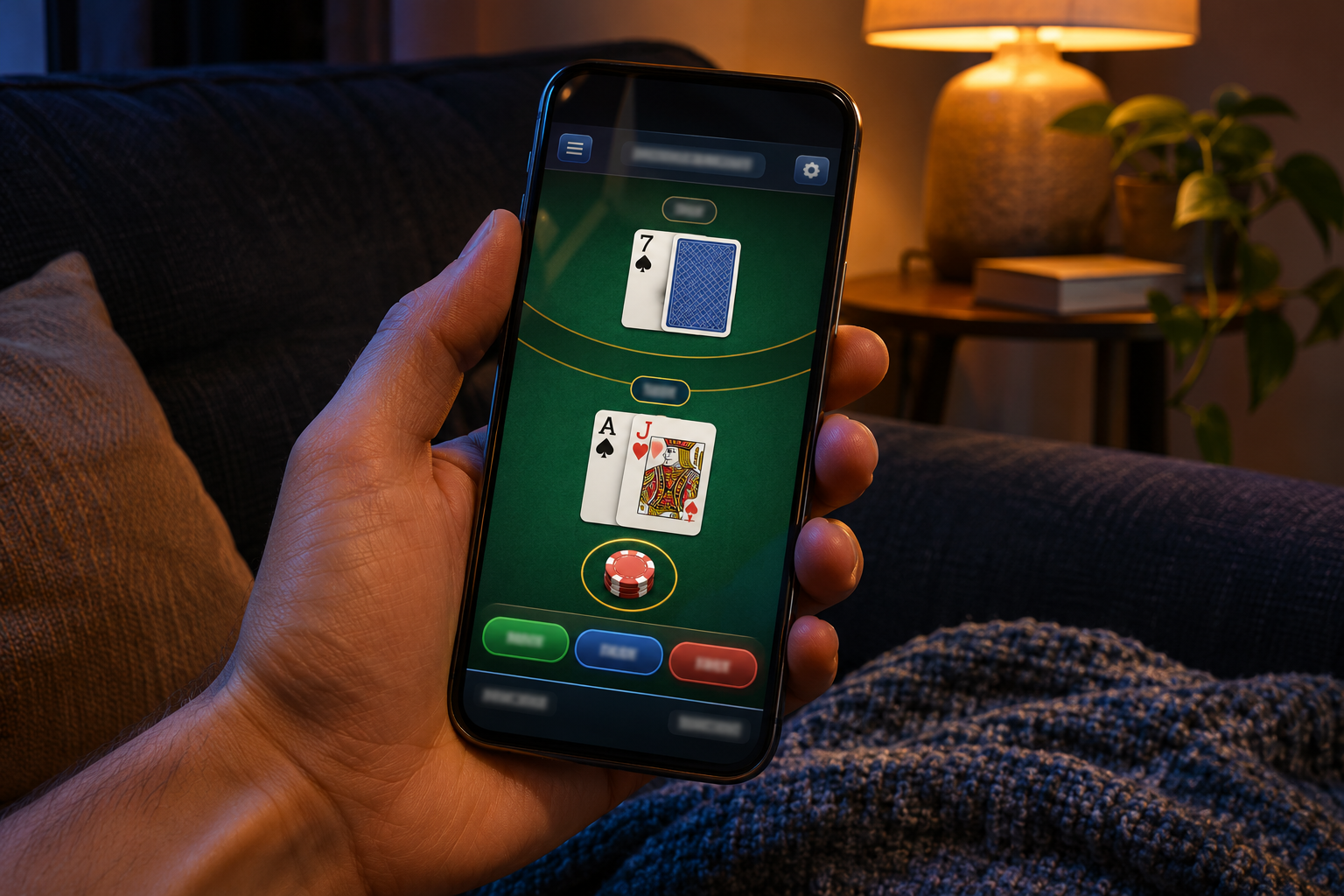
- 2 through 10: the number printed on the card is its point value.
- Jack, queen and king: each is worth 10 points, regardless of suit.
- Ace: worth 11 unless that would take the hand above 21, when it counts as 1.
Ace + 6 is soft 17: the ace is worth 11. Draw a 9 and the total changes to 16, because the ace drops to 1. That is now hard 16. A hand without an ace valued at 11 is hard too, such as 10 + 7.
An ace with a 10, jack, queen or king in the first two cards is a natural blackjack. Three 7s also make 21 but do not qualify for the natural payout. A natural beats a dealer’s three-card 21; two naturals push.
How to play blackjack: a round from start to finish
- Place a wager. Chips go in a betting position, also called a box. Check the table’s minimum and maximum limits. The starting bet is normally fixed after “no more bets”.
- Receive the opening cards. Players receive two cards. In the standard NZ land-based game, the dealer starts with one face-up card and receives the second later. American-style games generally deal a face-down hole card at the start.
- Check for a natural blackjack. An ace with a ten-value card qualifies. If the dealer shows an ace, insurance may be offered.
- Choose your action. Each player can hit, stand, double or split if eligible. Busting above 21 loses immediately, even if the dealer later busts.
- The dealer completes the hand. Once the players finish, the dealer follows the table’s fixed drawing rule.
- Settle each wager. Compare each surviving hand with the dealer. Higher totals win, lower totals lose and ties push, subject to natural-blackjack priority.
One NZ rule catches visitors out: under the standard land-based Division 2 game, a hand worth 11 or less must take another card unless it is doubled. You cannot stand on 11. The requirement appears in the Department of Internal Affairs’ Division 2 blackjack rules.
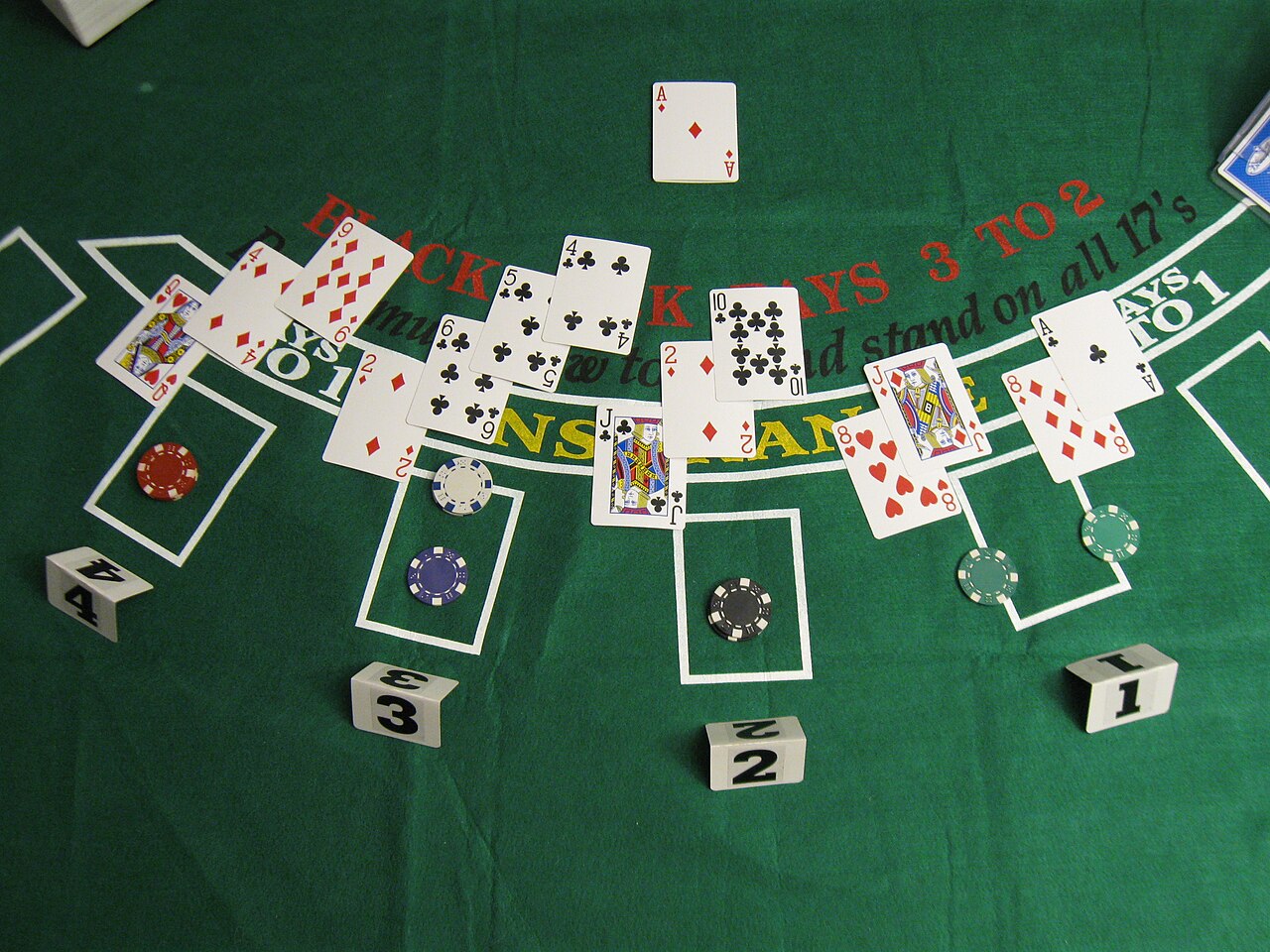
Player decisions: hit, stand, double and split
Hit: take another card
Hit to take one card. You can draw again while your hand remains eligible, but exceeding 21 is an immediate loss. With 10 + 5, drawing a 4 makes 19; drawing another 6 would bust at 25. At a face-up table, players commonly signal a hit by tapping the felt behind the betting box.
Stand: keep the current total
Stand to keep your total and end your turn. At a physical table, the usual signal is a horizontal sweep over the felt. A 20 still loses to a dealer’s 21. Under standard New Zealand rules you must reach at least 12 before standing.
Double down: increase the stake for exactly one card
Doubling adds a wager and commits you to exactly one more card. The extra amount is often the full original bet. New Zealand Division 2 rules allow an additional wager of up to the original stake, subject to the minimum betting increment.
Under the standard NZ rules, the first two cards must contain no ace to qualify for a double, including after an eligible split. A table may further limit doubling to 9, 10 or 11, to 10 or 11, or not offer it. A strategy chart telling you to double ace + 7 is unsuitable for that standard NZ rule. Named variants and online games can differ.
Say you start with NZ$20 on 6 + 5. A permitted NZ$20 double puts NZ$40 at stake. Draw a king and you have 21; against a dealer’s 19, the two wagers earn NZ$40 profit in total. If the dealer later makes blackjack, the separate dealer-blackjack settlement rule determines which extra wagers are lost or returned.
Split: turn one pair into separate hands
A split turns two eligible first cards into separate hands. You add a second stake equal to the first and play the first hand before the second. Standard NZ rules allow same-value cards to be split, including a 10 and a king, as well as two aces.
The standard NZ game permits resplitting a matching pair, up to three hands per betting box. A casino can post tighter limits. Each split ace receives just one additional card; you cannot hit it again. Ace + king after a split counts as 21, not natural blackjack.
Two 8s give hard 16. Against a dealer’s 6, splitting offers two new hands if the table permits it. With two 10s you already have 20; keeping them together is normally the stronger basic-strategy move.
Surrender: available only where expressly offered
Surrender forfeits half the original stake and ends the hand. Late surrender follows the dealer’s blackjack check; early surrender occurs sooner. Neither should be assumed at an NZ table: surrender is not a standard player action in DIA Division 2. An online variant may offer it in its rule panel.
What are insurance and even money in blackjack?
When the dealer shows an ace, the table may offer insurance. This separate wager pays 2:1 if the dealer completes a natural blackjack; otherwise it loses. Under standard NZ rules it is capped at half the original stake.
On a NZ$20 main bet, you can stake at most NZ$10 on insurance. A winning NZ$10 insurance bet yields NZ$20 profit, regardless of how the original hand is settled. It is a side bet, not a guaranteed refund.
With multiple standard decks and no special information about the remaining cards, insurance normally has negative expected value. The dealer’s ace alone does not make a ten-value second card frequent enough to justify its 2:1 payout. Basic strategy generally declines it.
Even money is different. If you hold a natural and the dealer shows an ace at a 3:2 table, you may be offered an immediate 1:1 win rather than risking a push for the chance of 3:2. Standard NZ rules specify the option for 3:2 tables; it is not available everywhere.
Dealer rules: when must the dealer hit or stand?
The dealer does not make strategic choices. In the standard NZ Division 2 game, the dealer hits below 17 and stands on all 17s, including soft 17. This is S17. The dealer cannot split or double.
Blackjack (Style A) uses H17: the dealer hits soft 17, then stops on hard 17 or soft 18 and above. Free Bet Blackjack has further variations. The game label and the printed dealer rule take priority over a generic strategy chart.
- Dealer has 10 + 6: 16 is below the stopping total, so another card is required.
- Dealer has ace + 6: soft 17 stands in an S17 game, but takes another card in an H17 game.
- Dealer has 10 + 7: hard 17 stands under either rule.
If all live main wagers are already resolved, the dealer may have no need to draw again, subject to side-bet rules. A player bust is already lost: a later dealer bust cannot undo it.
Blackjack payouts: 3:2 versus 6:5 versus 1:1
An ordinary win pays 1:1. For a natural blackjack, authorised standard NZ pay scales include 3:2, 6:5 and 1:1. The table sign decides which applies; a three-card 21 does not qualify for a natural payout.
| Result or pay scale | Profit on a NZ$20 wager | Total returned, including stake |
|---|---|---|
| Ordinary winning hand, 1:1 | NZ$20 | NZ$40 |
| Natural blackjack, 3:2 | NZ$30 | NZ$50 |
| Natural blackjack, 6:5 | NZ$24 | NZ$44 |
| Natural blackjack, 1:1 | NZ$20 | NZ$40 |
| Push / stand-off | NZ$0 | NZ$20 |
| Loss / bust | −NZ$20 | NZ$0 |
For a NZ$20 natural, 6:5 pays NZ$6 less profit than 3:2; 1:1 pays NZ$10 less. Changing 3:2 to 6:5 increases the house edge by roughly 1.4 percentage points in common rule comparisons with other conditions held similar. Exact figures vary with deck composition and other rules, so this is not a house-edge estimate for a named NZ casino.
A push, or stand-off, returns the original stake without profit. Two natural blackjacks push. A natural beats an ordinary 21 made from three or more cards.
Worked blackjack hands
Winning without reaching 21
You stand on 10 + 9 = 19. The dealer has 10 + 8 = 18. Your NZ$20 wager wins NZ$20 profit, despite never reaching 21.
Dealer bust after a player stands
You stand on 12; the dealer draws 10 + 6 + 8 = 24 and busts. Your 12 wins. Had you busted first, the dealer’s 24 would not rescue the bet.
Natural blackjack versus ordinary 21
Ace + queen in your opening two cards beats a dealer’s 7 + 5 + 9 = 21. If the dealer also held a two-card natural, the outcome would be a push.
What happens to extra stakes if the dealer makes blackjack?
A late dealer blackjack matters in a no-hole-card game. Under the default NZ provision, the dealer takes the original wager but returns extra double-down or split wagers. A casino may post a different rule that also collects those additional bets. That one condition changes the financial risk of doubling and splitting.
Blackjack basic strategy: decisions that follow the rules
Basic strategy uses your total, the dealer’s upcard and the table rules to choose a hit, stand, double or split. It cannot predict a card or guarantee a profit. An American hole-card chart with ace doubling may give the wrong move for a standard NZ table where the dealer receives a second card later and an ace prevents doubling.
| Player’s cards | Dealer upcard | Illustrative decision | Reason |
|---|---|---|---|
| 10 + 10 (hard 20) | 6 | Stand | A strong total is better retained than split into two exposed wagers. |
| 6 + 5 (hard 11) | 6 | Double if permitted | A favourable starting total can benefit from the one-card double. |
| 8 + 8 (hard 16) | 6 | Split if permitted | Two 8s can be played separately rather than as a single 16. |
| 10 + 6 (hard 16) | 10 | Hit if surrender is unavailable | Standing on 16 against a strong dealer card is costly under common multi-deck rules. |
| Ace + 7 (soft 18) | 6 | Stand in standard NZ rules | Some charts recommend a double, but standard NZ doubling excludes initial hands containing an ace. |
These are illustrative multi-deck decisions, not a full chart. An accurate chart needs the dealer’s S17/H17 rule, doubling limits, splitting rules, payout and late-dealer-blackjack settlement.
Card counting is a separate technique. Hi-Lo and similar systems track high and low cards left in a physical shoe; they do not remove short-term volatility. Frequent reshuffling and continuous shuffling machines reduce the usable information. A software game that independently reshuffles each hand has no persistent shoe composition to follow.
How to read a blackjack table’s rules in New Zealand
Before using a strategy chart, compare its assumptions with the table’s posted conditions:
- Natural-blackjack pay scale: identify 3:2, 6:5 or 1:1. This affects a relatively frequent premium result and can matter more than a small difference in the number of decks.
- Dealer soft 17: distinguish S17 from H17. Under H17, the dealer draws again on ace + 6, changing both outcomes and strategy.
- Deck count and shuffle: standard NZ authorised table rules use four to eight 52-card decks, typically dealt from a shoe; an automatic or continuous shuffler may be used.
- Doubling restrictions: check permitted totals, the prohibition or permission for ace-containing hands, the minimum additional increment and whether doubling after a split is allowed.
- Splitting conditions: check which pairs qualify, the maximum number of hands, resplitting rights and the one-card limit after splitting aces.
- Dealer’s second card and settlement: determine when it is drawn and whether a later dealer blackjack takes only original wagers or additional split/double wagers as well.
- Betting limits and optional wagers: identify the table minimum, maximum, number of playable boxes, side-bet paytables and any additional rules shown on the layout.
The Christchurch Casino blackjack article and Grand Casino Dunedin rules describe a single face-up initial dealer card, no doubling with an ace, restricted split aces and protection for added wagers under their stated standard games. Those terms are examples, not a guarantee for every NZ table.
Blackjack variants, side bets and online play
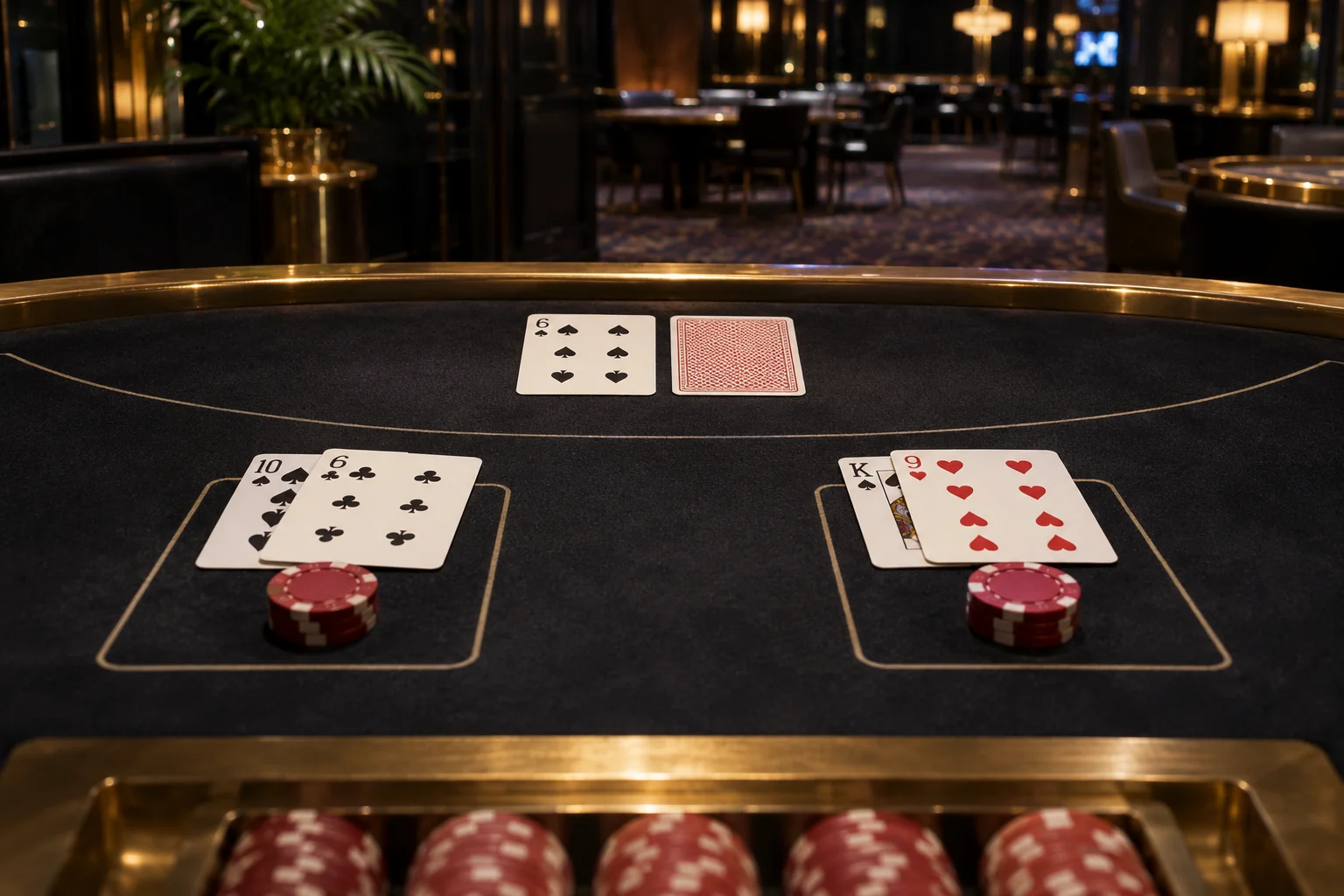
Blackjack belongs to the wider 21 family. NZ’s authorised table-game rules also name Blackjack (Style A), Blackjack +, Ante Up Blackjack, Free Bet Blackjack and Player Select Blackjack. Dealer procedures, bonus payments, fees and split/double permissions differ across these games.
European Blackjack, Atlantic City Blackjack, Spanish 21, Blackjack Switch and Pontoon are not interchangeable with standard blackjack. In Free Bet Blackjack, a dealer 22 can push eligible non-blackjack hands instead of losing as a normal dealer bust would.
Blackjack variants and formats at a glance
The editorial score below rates how easy each format is to learn from its rules, not its fairness, payout or chance of winning. It is an article about the game format, not a rating of a casino. NZ land-based casino rules and online game rules can differ; availability of a named variant is not implied.
| Variant or format | What changes | Editorial ease-to-learn |
|---|---|---|
| NZ casino blackjack (Division 2) | A useful baseline for the NZ land-based rule set. Check the posted rules for the dealer’s procedure, payout and permitted actions. | 5 / 5 |
| European blackjack | Many versions deal the dealer’s second card after player decisions. Check how doubles and splits are settled if the dealer later has blackjack. | 4 / 5 |
| Atlantic City blackjack | Some tables allow late surrender and doubling after a split. These options are not universal, so read the table rules rather than relying on the name. | 4 / 5 |
| Spanish 21 | Usually uses a 48-card Spanish deck with the 10s removed, alongside special bonuses and variant-specific player options. | 3 / 5 |
| Pontoon | A related 21 game that commonly uses “twist” and “stick” for hit and stand. A two-card 21 is called a Pontoon; payout and dealer rules vary. | 3 / 5 |
| Blackjack Switch | Players make two hands and may exchange the second card between them. A special dealer-22 rule is common; check the exact settlement rule. | 2 / 5 |
| Free Bet Blackjack | Some doubles or splits are offered without an extra stake under stated conditions. Many versions make a dealer 22 a push on eligible hands. | 3 / 5 |
| Live-dealer blackjack | A human dealer is streamed to the player. This describes how the game is presented, not a ruleset; payouts, side bets and decisions still vary. | 4 / 5 |
| RNG blackjack | Software deals and settles the hand rather than a streamed dealer. The rule panel still determines payouts, dealer behaviour and available actions. | 4 / 5 |
Side bets have their own paytables and outcomes. NZ authorised provisions name Perfect Pair, Any Pair, Super Sevens, Madness 21, House Money, Let it Ride, Lucky Match, Lucky Lucky, Buster Blackjack and Push 22; online games may also offer 21+3. These bets can reward matching ranks, suits, colours, sequences or dealer busts. They do not change the usual main-hand card values, and their extra stakes add risk.
Live-dealer blackjack uses a streamed dealer; RNG blackjack generates outcomes by software. Neither format guarantees one universal ruleset. Dealer card order, surrender, side bets and payouts come from that game’s rule panel. A multi-hand game allows several betting positions and increases the total amount at stake.
Blackjack and gambling rules in New Zealand
The Gambling Act 2003 governs land-based casinos in New Zealand. The Department of Internal Affairs (DIA) publishes authorised table-game rules, and physical casino entry is restricted to people aged 20 or over. The Online Casino Gambling Act 2026 sets up a separate licensing regime with an 18 or over minimum for licensed online play. The transition is staged, so the existence of the Act does not mean every online operator is licensed.
A favourable ruleset and accurate basic strategy may lower the long-run house edge; neither turns blackjack into an income stream. Ten NZ$20 hands mean NZ$200 in cumulative wagers, not one NZ$20 exposure. Extra boxes, side bets and escalating stakes add to the money at risk.
Never stake money needed for essentials. Gambling Helpline New Zealand offers confidential support by freephone on 0800 654 655 or free text on 8006.
Common blackjack mistakes
- Trying to reach 21 at any cost: the objective is to beat the dealer. An unnecessary hit can destroy a winning hand.
- Confusing natural blackjack with any 21: only the original ace-plus-ten-value combination earns the natural payout and priority.
- Ignoring the payout sign: a 6:5 or 1:1 natural pays less than a 3:2 natural, even when every other rule looks familiar.
- Using a strategy chart for a different ruleset: dealer hole-card procedure, ace-doubling restrictions and soft 17 can change the appropriate move.
- Buying insurance as routine protection: insurance is a priced side wager, not a guaranteed hedge against a losing hand.
- Assuming additional split or double stakes are safe: the posted rule governing a late dealer blackjack determines what happens to those wagers.
- Chasing losses by increasing stakes: betting progression cannot alter the odds of the next hand and can accelerate losses.
Blackjack rules: frequently asked questions
What is the main rule of blackjack?
Beat the dealer without exceeding 21, or remain in the hand when the dealer busts. You compete with the dealer, not the other players.
Does an ace count as 1 or 11?
Eleven unless it would make the total exceed 21; then one. With an ace worth 11, the hand is soft.
Does the dealer have to hit on 16 and stand on 17?
In standard NZ blackjack the dealer hits below 17 and stands on every 17, including soft 17. In Blackjack (Style A), the dealer hits soft 17.
Can you split a 10 and a king?
Yes, under the standard NZ rule that permits splitting equal-value cards. A posted table condition can restrict it. Splitting 20 is ordinarily a poor basic-strategy choice.
What happens when both player and dealer get 21?
Ordinary 21s tie and push. A two-card natural beats an ordinary 21; two naturals push.
Can you stand on 11 in New Zealand blackjack?
No. Standard NZ Division 2 requires a hit on 11 or less unless the hand is doubled. A named or online variant may use another rule.
What is the difference between 3:2 and 6:5 blackjack?
For a NZ$20 natural, 3:2 earns NZ$30 profit and 6:5 earns NZ$24. The difference is NZ$6 for the same winning hand.
Can blackjack be beaten with basic strategy?
Basic strategy lowers expected losses relative to guesswork. It normally does not remove the house edge or prevent losing sessions.
Is blackjack the same as Pontoon?
No. Pontoon has different terminology, hand rankings, dealer procedures and payouts. A blackjack strategy chart does not automatically apply.
← Back to Casino Games