
On this page
How a roulette round works
Players place chips on a layout before the dealer spins the wheel and releases the ball. When the ball settles in a numbered pocket, the casino pays winning bets according to the table's rules. European roulette normally has 37 pockets, numbered 0 to 36. American roulette normally adds a 00 pocket, for 38 in total. Always check the exact wheel shown in the game rules.

On many tables, a straight-up bet on one number pays 35 to 1. Bets on red or black, odd or even, or low or high numbers commonly pay 1 to 1. The zero pocket is green and is not part of red/black, odd/even or low/high groups.
Inside and outside bets
An inside bet covers a small number of pockets: for example, one number, two adjacent numbers, a row of three, or a block of four. An outside bet covers a larger group, such as a colour or dozen. A larger group wins more often in the short term than a single-number bet, but it pays less when it wins. Neither bet type changes the wheel's underlying probabilities.
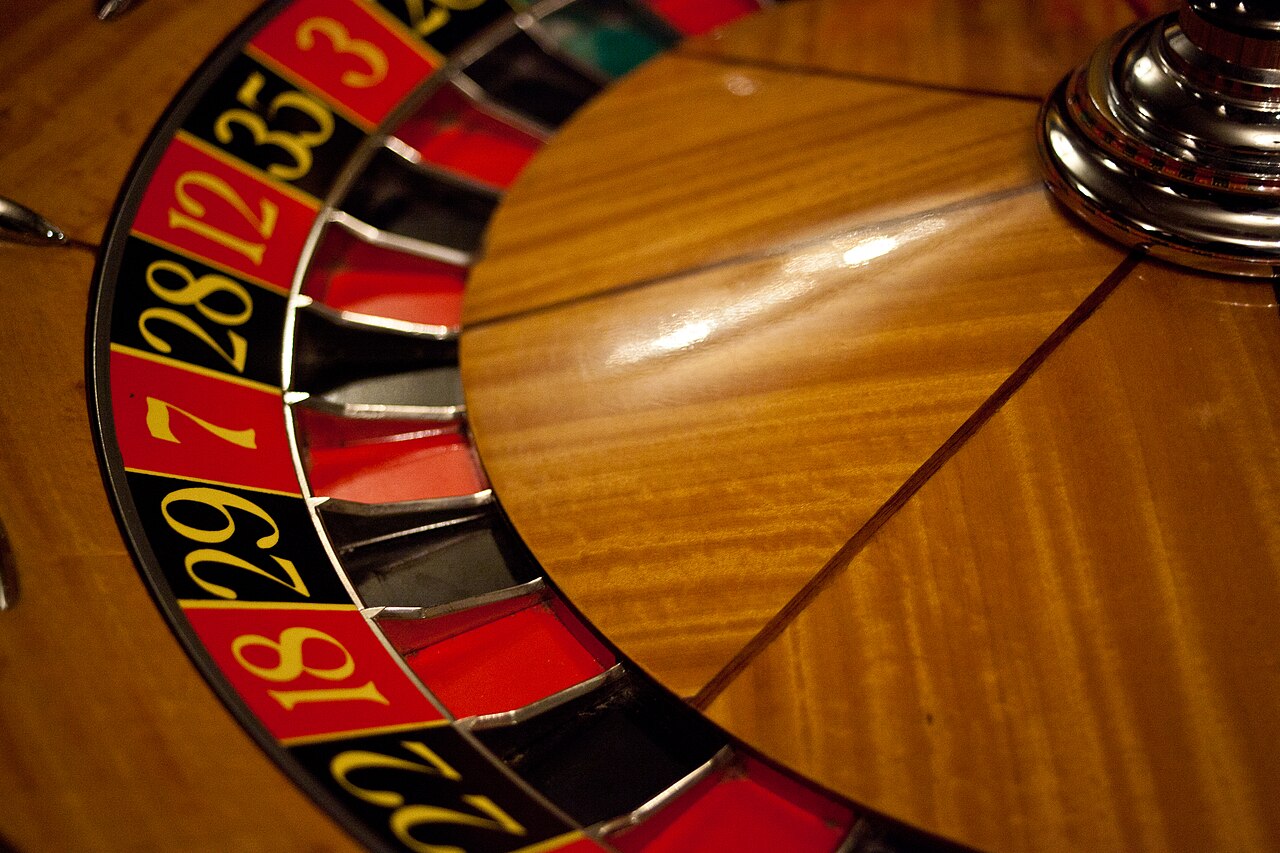
On a standard single-zero wheel, the house edge on common bets is about 2.70%. On a standard double-zero wheel it is about 5.26%. Optional rules such as La Partage can alter some even-money bet outcomes; read the table rules rather than assuming every game uses the same version.
A sequence is not a signal
Each spin is a separate result in a properly operated game. A run of red results does not make black due, and a number that has not appeared recently is not more likely to arrive next. A past-results display is a record, not a forecast. Set a fixed spending limit and do not increase stakes to try to recover losses.
European and American wheel odds
On a standard European wheel, one number wins on 1 of 37 pockets; on a standard American wheel, it wins on 1 of 38 because the wheel includes both 0 and 00. An even-money colour bet covers 18 pockets, so its chance before the zero rule is 18/37 or 18/38. Use the fractions to compare wheel layouts; a short run can look very different.
For a standard single-zero game, an even-money bet that loses on zero has a house edge of 1/37, about 2.70%. On a standard double-zero wheel, the corresponding edge is 2/38, about 5.26%. Special rules such as La Partage can change settlement on some even-money bets; read the rule panel.
What each layout pays
A straight-up wager covers one pocket and commonly pays 35 to 1 in net winnings, with the original stake also returned on a win. A split covers two adjacent numbers and a corner covers four; their usual payouts are lower because more pockets qualify. Outside bets cover broad groups such as red/black, odd/even or a dozen. Read the displayed paytable; similar layouts can settle differently.
| Bet | Single-zero pockets | Check |
|---|---|---|
| Straight-up | 1 of 37 | Displayed payout and whether 0/00 is included. |
| Split | 2 of 37 | Selected numbers share a permitted boundary. |
| Red/black | 18 of 37 | How zero is settled and any special rule. |
Zero, split numbers and special rules
Check whether the game shows European, American or another wheel. The 0 and 00 pockets are not red or black and are outside standard odd/even, low/high and dozen groups. A dozen bet covers 12 numbers; zero is outside all three dozens. The history panel records earlier spins; it cannot point to the next pocket.
Confirm whether the table uses La Partage, En Prison or a special racetrack bet, and whether those rules apply to this virtual or live version. If the paytable is hidden or differs from the layout, do not guess. Save the game name and rule screen when comparing versions; the wheel configuration and settlement rule determine the calculation.
The edge across a constructed wheel sequence

On a standard single-zero wheel, imagine one unit staked on red for each of 37 spins. If the sequence contains the wheel's 18 red pockets once each and its 19 non-red pockets once each, the red bets return 18 units of net winnings and lose 19 units, for a net loss of one unit across the sequence. Real spins will not follow that tidy sequence; 1/37 is the theoretical edge over time.
On a standard double-zero wheel, 18 red pockets and 20 non-red pockets make a corresponding net loss of two units across 38 such outcomes. The calculation assumes even-money settlement and no special rule. The calculation describes the long-run edge; it cannot forecast the next 37 or 38 spins.
← Back to Casino Games